How skills-based hiring is reshaping talent acquisition across Ireland.
Business rates pressure on NI hospitality and why turnover no longer reflects capacity to pay.
Northern Ireland faces renewed trade uncertainty under Trump. Learn how tariffs, FDI risks, and economic shifts could impact businesses and how to stay resilient.
Explore the stark differences in pace between Northern Ireland and the south's Programmes for Government, and their impact on public services and infrastructure.
Explore how regional balance policies aim to boost Northern Ireland's economy without undermining Belfast's pivotal role in growth, productivity, and innovation.
Labour’s UK Budget delivers major tax hikes and funding shifts, aiming to stabilise finances and boost growth. Discover the big implications ahead.
Explore the economic impact of Casement Park, Euro 2028, and Northern Ireland’s lost opportunities. Learn how fiscal challenges may shape future investments and growth.
Northern Ireland's Programme for Government remains elusive, raising concerns about addressing urgent issues like infrastructure, health, and housing amid tight finances.
Labour's economic plan focuses on stability, self-sufficiency, and growth. New leaders will need economic luck to navigate challenges and ensure progress.
Despite challenges, with £1.5 billion investments, Northern Ireland's hotel sector shows promising growth. But as poverty persists, the economic landscape remains complex.
For the past couple of years, Northern Ireland has been working towards an economic vision known as 10x. Launched in May 2021, 10x Economy set out an ambitious vision that would see the economy transform over the next decade. The problem with 10x over the past two years is that there was never any clear sense of what the actions were going to be to get us to an economy that is 10x bigger.
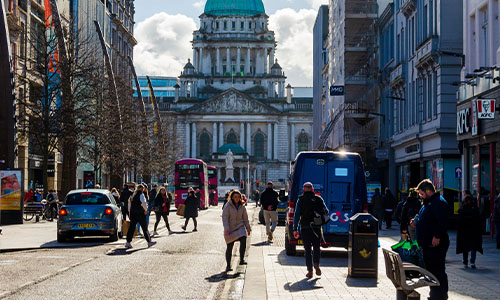
Grant Thornton's Chief Economist, Andrew Webb, dissects Belfast City Centre's challenges and unveils the Future City Centre Programme for revitalisation.
Economy watchers were reaching for the popcorn over the past week as estimates of 50% growth in our economic fortunes over the next decade were cited as the potential prize from the Windsor Framework. Understandably, such an upbeat prediction was given significant airtime, which sparked reaction and challenge by some in the academic community.
The economy has rolled from punch to punch over the last number of years, prompting a necessarily reactionary approach. 2023 has started with a similarly uncertain outlook.
As we enter a New Year and the memories of our celebrations begin to fade, we will inevitably look to the 12 months ahead to understand how 2023 shapes in terms of work, holidays and finances. To that end Economists are like everyone else, except we will look ahead to what potential challenges and opportunities await the economy. While we will admit this is probably a dull exercise to many, we find this is quite a useful task, which will allow us to confidently advise our clients on how to ‘navigate’ the year ahead.
The events of the last two and a half years have had a monumental impact on all our lives, but as we return to some normality, one of the legacies of the pandemic has been the enduring impact on how we work.